A building may enter construction with good operational intent already embedded in the design.
But that intent still has to survive the build stage.
Construction decisions made through material substitutions, RFIs, shop drawings, coordination changes and installation details can all influence how easily an asset will eventually be maintained, cleaned, repaired and operated.
Individually, many of these decisions may appear relatively minor.
Collectively, they can shape everyday operations for years.
Operational Intent Can Change During Construction
Design drawings establish the intended solution, but construction introduces another layer of decisions.
Products may become unavailable.
Alternative materials may be proposed.
Services may need to move because of coordination constraints.
Access panels may shift.
Equipment layouts may be adjusted.
Installation methods may change.
Each decision may be technically acceptable and necessary to keep the project moving.
The operational question is different:
What does this change mean once the building is in use?
A solution can satisfy the immediate construction requirement while making future operation more difficult.
This is why operational review should not stop when design is completed.
Material Substitutions Affect More Than Appearance
Material substitutions are a normal part of project delivery.
But equivalent specification does not always mean equivalent operational performance.
Two finishes may meet the same technical requirement while behaving very differently in daily use.
One may be easier to clean.
Another may stain more easily.
One may tolerate frequent maintenance.
Another may require specialist treatment or products.
The same applies to equipment and components.
An alternative supplier may satisfy the technical specification but have different requirements for spare parts, service support, warranties or replacement.
The question should therefore go beyond whether the proposed substitution complies with the specification.
It should also consider whether the replacement remains practical throughout the operating life of the asset.
Small Access Changes Can Create Permanent Constraints
Access is another area where apparently small construction decisions can have long-term consequences.
During coordination, equipment may move slightly.
A ceiling opening may become smaller.
A valve may end up behind another service.
An access panel may be positioned where it is technically possible to reach the equipment, but difficult to carry out the actual maintenance task.
The distinction is important.
Being able to see or touch a component is not the same as being able to inspect, service, repair or replace it safely.
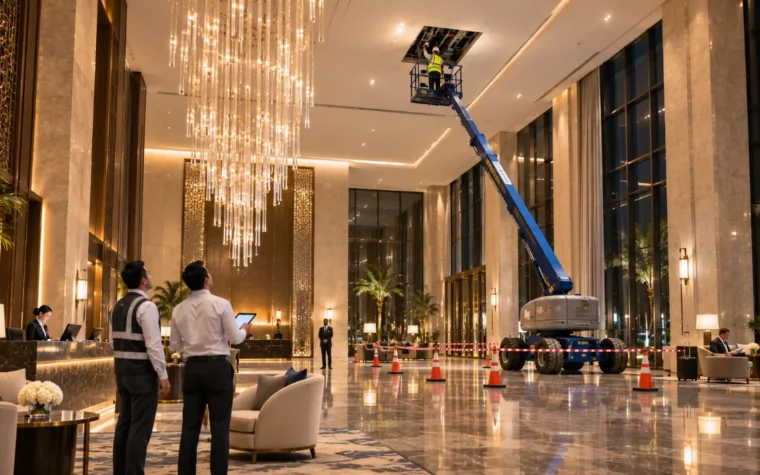
This becomes particularly important for high-level equipment, concealed services and areas where future maintenance may require ladders, scaffolding, mobile elevated work platforms or disruption to occupied spaces.
A small adjustment during construction may prevent a much larger operational problem later.
Installation Details Matter in Daily Operations
Some of the consequences of construction decisions are not visible on the design drawing.
They emerge through the way the solution is actually installed.
The orientation of equipment, clearance around components, location of isolation points, accessibility of filters, position of drains and arrangement of control panels can all determine how easily routine work can be performed.
For the construction team, the immediate question may be whether the installation can be completed correctly.
For the future operating team, the question is whether that installation can be managed repeatedly and safely over many years.
That is where the operator’s perspective adds value during the build stage.
Supplier Decisions Continue Beyond Handover
Construction decisions also influence who will support the asset once it enters operation.
Selecting equipment is not only about technical performance and initial cost.
Developers should also consider local service capability, availability of spare parts, response times, warranty support and long-term maintainability.
A product can perform well on paper but become difficult to support if parts are unavailable or specialist assistance has to come from outside the market.
These considerations are easier to address before procurement and installation are complete than after the asset has entered operation.
Construction Reviews Should Focus on Operational Consequences
The purpose of an operator-led construction review is not to interfere with normal project delivery or duplicate the role of consultants and contractors.
It is to bring a different question into selected decisions:
Will the proposed solution still work practically when the building is operating?
That may mean reviewing a proposed substitution.
It may mean commenting on an RFI.
It may mean reviewing a shop drawing where access or maintainability has changed.
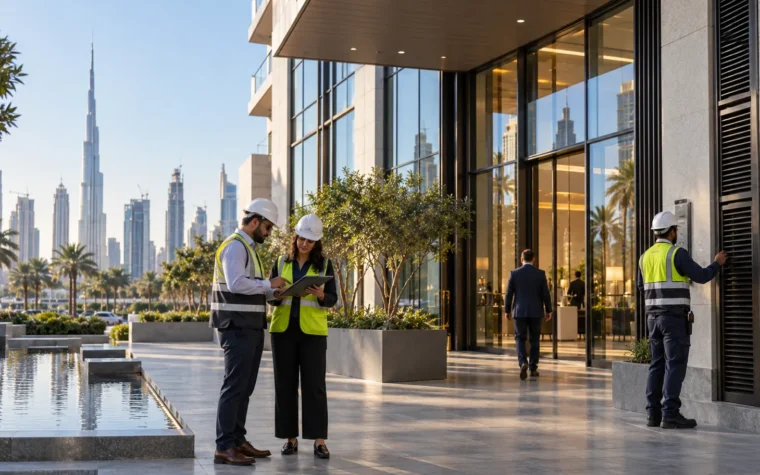
Or it may mean walking the site and identifying an installation detail that will become difficult once ceilings, finishes or surrounding works are completed.
The greatest value often comes from addressing these issues while the project team still has practical options available.
What This Means for Developers
Construction is the point where design intent becomes physical reality.
It is also where many operational consequences become embedded in the asset.
The objective is not to prevent construction decisions or necessary changes.
Projects need flexibility, and construction teams need to solve problems.
The objective is to make sure that necessary changes do not unintentionally compromise maintainability, accessibility, usability or long-term asset performance.
Well-informed construction decisions help preserve operational intent while there is still time to act.
Because the decisions made to complete a building also shape what it will be like to operate every day.