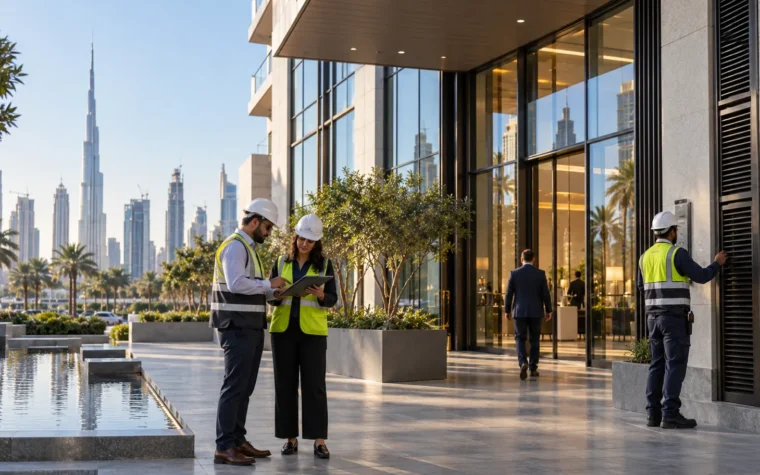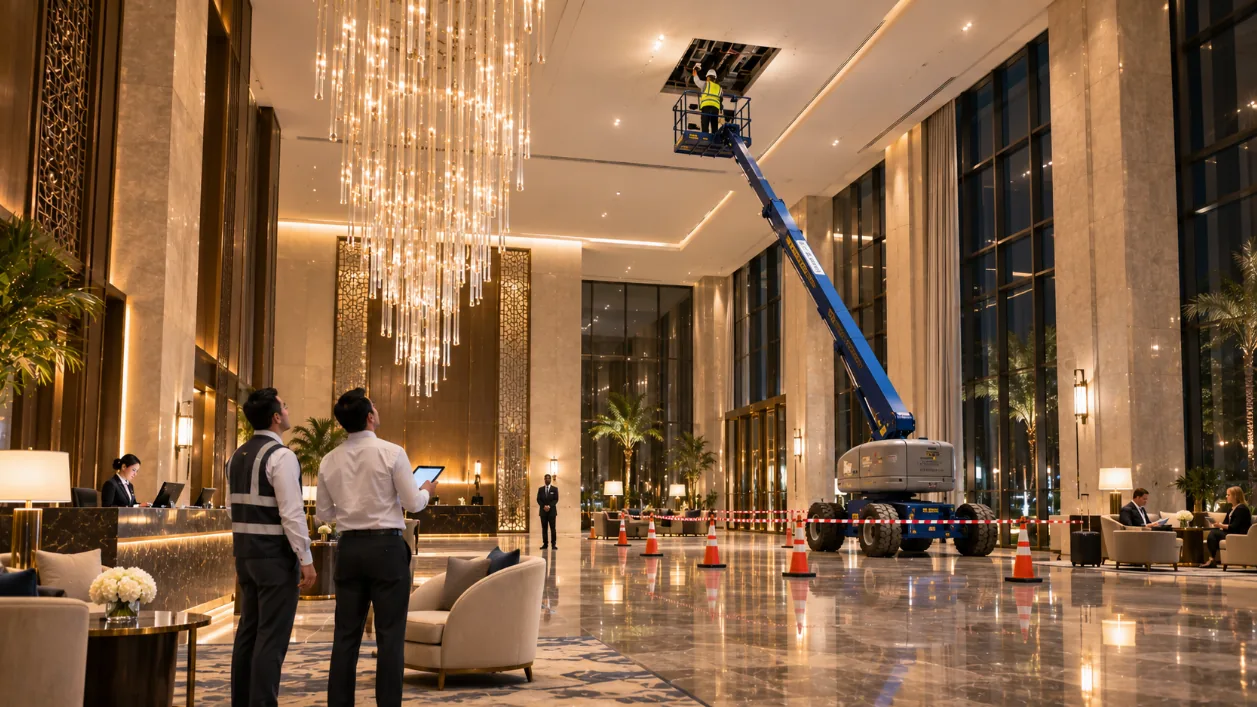
Design for operability means considering how an asset will actually be used, maintained, cleaned, repaired and eventually replaced while key design decisions can still be influenced.
A design can be compliant, technically sound and fully constructible, yet still create avoidable operational challenges once the building is in use.
The operator’s lens adds a simple question to the design process:
Will this solution work practically for the people who have to operate it for years?
Operability Is Decided Earlier Than It Appears
Many operational problems begin with decisions that appear relatively minor during design.
Equipment may fit within a plant room, but the access door may not allow its largest component to be removed later.
Services may be installed successfully at high level, but without practical access for future maintenance.
Equipment above a false ceiling may function perfectly, while access panels make routine servicing unnecessarily difficult.
None of these issues necessarily prevents construction from progressing.
They become visible when somebody has to maintain, repair or replace the asset.
Design for operability brings these questions forward, while there is still an opportunity to resolve them through design.
Access Must Support the Maintenance Task
Providing access does not simply mean that a technician can reach the equipment.
The real maintenance task may require working space, tools, lifting arrangements, removal of components or temporary access equipment.
Mechanical equipment, pumps and motors may require lifting provisions for breakdown or replacement. High-level installations may need permanent access rather than an improvised solution after handover.
Even a well-positioned access panel can become ineffective if it is too small to carry out the maintenance activity behind it.
The question should therefore not be:
Can we reach it?
It should be:
Can the required work be carried out safely and practically?
That distinction is central to design for operability.
Design for Replacement, Not Only Installation
Most major assets will eventually require substantial repair or replacement.
Yet installation receives far more attention during a project than future removal.
Plant-room doors, access panels and circulation routes should therefore consider the largest maintainable component that may need to pass through them.
The same principle extends beyond plant rooms.
Façade glass may eventually need replacement. Landscape elements may need to be removed and renewed. Large equipment may require a clear route from its installed position to a suitable loading point.
A component can be easy to install during construction because the building around it is incomplete.
Years later, ceilings, walls, finishes, landscaping and occupied areas may make the same movement significantly more difficult.
Designing the replacement route early protects future flexibility.
Cleaning Strategy Is Also a Design Decision
Cleaning is one of the most frequent activities carried out throughout the life of a building, yet its requirements can easily be underestimated during design.
Façade cleaning strategies, for example, need to be established before the final design is completed. Access systems must be able to reach the areas that actually require cleaning and maintenance.
Internally, the same principle applies.
Water points, drainage, equipment storage, durable finishes and practical access all influence how efficiently common areas, plant spaces and external areas can be maintained.
Material selection also plays a role. A finish may satisfy the design intent but still require frequent specialist cleaning or prove vulnerable to repeated operational use.
Design for operability therefore considers not only how a material looks on opening day, but how it will perform after repeated use and maintenance.
Everyday Operations Test the Design
Some of the strongest lessons come from ordinary operational activities.
Consider waste collection.
A waste strategy may identify where refuse is collected, but the design also needs to consider whether the collection vehicle can actually enter, turn, manoeuvre and reach the intended location.
The same thinking applies to deliveries, maintenance vehicles, emergency access, landscaping equipment and other operational movements.
These details may appear secondary on a drawing.
In daily operation, they can determine whether the intended process works at all.
This is why the operator’s perspective is valuable during design. It tests the interface between the drawing and the activity that will eventually take place within it.
The Operator’s Lens Complements the Design Team
Design for operability is not intended to replace architects, engineers or specialist consultants.
Nor should it become another unnecessary approval layer.
Its role is to test design decisions against the realities of operating the completed asset.
Can equipment be accessed and maintained?
Can major components eventually be removed?
Can façades and high-level elements be cleaned safely?
Are access panels positioned for the task behind them?
Can operational vehicles actually use the routes designed for them?
Will materials withstand the way the building will really be used?
These questions complement the technical design process by introducing the lifecycle perspective of the future operator.
What This Means for Developers
Operational performance is shaped long before the operating team receives the building.
The earlier operational requirements are considered, the greater the opportunity to resolve constraints through normal design development rather than through later modifications or permanent operational workarounds.
That does not mean designing a building around maintenance.
It means ensuring that design intent and operational reality can coexist.
Design for operability is ultimately about making sure that what is designed to work can also be operated, maintained and replaced in the real world.
The best time to resolve an operational constraint is before it becomes part of the built asset.